MOJ
eISSN: 2374-6939


Case Report Volume 16 Issue 1

1Physical Medicine and Rehabilitation, Van Education And Research Hospital, Turkey
2Family Medicine, Tusba District Health Directorate, Van, Turkey
Correspondence: Dr. İsmail tunçekin, Van Education And Research Hospital, selimbey district, nenehatun Street, city van, Turkey, 65200, Tel +905417666751
Received: January 10, 2024 | Published: January 22, 2024
Citation: Tunçekin I, Abay M, Tunçekin S. Mucositis due to high dose methotrexate use in a patient with rheumatoid arthritis. MOJ Orthop Rheumatol. 2024;16(1):14-15. DOI: 10.15406/mojor.2024.16.00656
Methotrexate (MTX) is used as a disease-modifying anti-rheumatic drug (DMARD) in the treatment of rheumatoid arthritis due to its strong efficacy and tolerability.1 MTX has a wide range of side effects including bone marrow suppression, hepatic or renal dysfunction, gastrointestinal, mucocutaneous damage and neurotoxicity.2 Serious side effects and toxicity occur, especially if the dose is mistakenly used daily. However, mtx is normally used weekly Age, drug interaction, individual sensitivity and comorbidities may contribute to the development of toxicity.3 Regular monitoring and selection of patients for the use of MTX medication, appropriate counselling on drug interactions, instructions on side-effects are necessary to prevent such complications.We presented our case on the development of toxicity table as a result of daily use of MTX in RA treatment.
Keywords: methotrexate intoxication, rheumatoid arthritis,mucositis
A 67-year-old woman with rheumatoid arthritis presented to the family physician with complaints of fatigue, sores in the mouth, dysphagia, bleeding gums, bleeding lips and sores on the tongue. Physical examination revealed oral mucositis and stomatitis (Figure 1). In the rheumatology control of the patient 10 days ago, it was seen that his medical treatment was adjusted as oral MTX 10 mg/week. However, it was found out that he was using MTX 10 mg/day during the interrogation. The patient's medical history revealed that he had RA for 2 years and had no other known disease. It was determined that the patient, who was followed up with a diagnosis of RA, took his medication regularly and used MTX weekly until 10 days ago. At the 10-day follow-up visit, the patient's treatment was arranged in the same way, but the patient took 10 mg of the drug throuhgout 7 days. On the 4th day of drug treatment, the patient felt weakness and difficulty in eating and was given medical treatment in the hospital where she was hospitalised considering simple oral aphthous. The patient continued to use MTX for 3 more days in this way and then developed an increase in mouth sores and bleeding in the gums and lips. The patient, who applied to the family physician due to increasing complaints, was evaluated and admitted to our clinic.
Physical examination revealed no additional findings except oral ulcers in the mouth, ulcerated lesions with haemorrhage on the lips, mucositis, gingivitis and stomatitis (Figure 1). Arthritis, ecchymosis and any skin lesion were not observed. Laborutaur examination showed bicytopenia (Table 1).
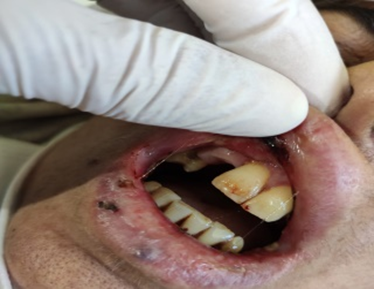
Figure 1 Stomatitis due to methotrexate intake.
|
WBC:3.63 10^3/uL |
Albumin:3.3 |
Sedimentation:65 mm |
|
Hgb:12.2 g/dL |
ALT:69 u/L AST:40 u/L |
CRP:103 mg/dl |
|
Platelets:66 10^3/uL |
BUN:12.62 |
Markers of hepatitis: negative |
|
Neutrophils:0.18 10^3/uL |
Creatinine:0.6 mg/ dL |
Brucella, Salmonella: negative |
|
Lymphocytes:2.17 10^3/uL |
Folate:14.2 |
ANA, Anti-dsDNA, vitamin B12: normal |
Table 1 Initial laboratory findings
MTX was discontinued and filgrastim 30 million units (MU)/day subcutaneously as granulocyte colony stimulating factor and calcium folinate 4x50 mg/day intravenously as MTX antidote were started. After granulocyte colony stimulating factor, leucocytes of the patient started to increase on the 4th day of treatment. Calcium folinate was given as 4x50 mg for two days, then 4x25 mg for two days. It was given 2x25 and 1x25 for one day and then continued with oral folic acid 5 mg tablet. Subsequently, the patient developed neutropenia and complained of fever. Piperacillin tazobactam 4x4.5 mg iv, vancomycin 2x1 mg iv and caspofungin tb and oral mouthwash for oral antisepsis were started by infectious diseases department. On the 2nd day of treatment, stomatitis and gingivitis regressed and general condition improved.
On the 5th day of hospitalisation, the doses of antibiotics were reduced and changed due to a significant increase in creatinine levels. Calcium folinate was also stopped at the end of day 6. After 8 days of treatment, mucositis regressed and bicytopenia improved and the patient was followed up as an outpatient (Figure 2). The blood values of the patient on admission and at the time of discharge are summarised in Table 2.
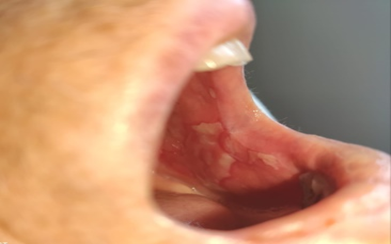
Figure 2 The patient's oral mucositis improved on the 8th day after treatment.
|
Complete blood results on first arrival |
Complete blood results at discharge |
|
Hgb: 12.2 g/dL |
Hgb: 10.2 g/dL |
|
WBC: 3.63 10^3/uL |
WBC: 17.68 10^3/uL |
|
Neutrophils:0.18 10^3/uL |
Neutrophils:13.3 10^3/uL |
|
Lymphocytes:2.17 10^3/uL |
Lymphocytes: 2.37 10^3/uL |
|
Platelets :66 10^3/uL |
Platelets:450 10^3/uL |
|
ALT:69 u/L |
ALT: 38 u/L |
|
ASTt:40 u/L |
AST: 29 u/L |
|
Creatinine:0.67 mg/ dL |
Creatinine: 1.82 mg/ dL |
|
CRP:103 mg/ dL |
CRP:6 mg/ dL |
|
Sedim: 65 mm/h |
Sedim: 12 mm/h |
Table 2 Laboratory findings of the patient's first arrival and discharge period
Long-term use of MTX in the treatment of rheumatoid arthritis is highly effective and safe. However, it may cause severe side effects such as pancytopenia and bone marrow suppression, inflammation and necrotic changes in mucosal tissues, hepatic cirrhosis, pulmonary fibrosis and renal dysfunction. In the study by Dalkilic et al.4 the most common symptoms were mucositis 28 (90.3%), fever 22 (71%), infection 16 (51.6%) and purpura 8 (25.8%). MTX is a dihydrofolate reductase enzyme inhibitor with very high selectivity and therefore affects tissues with rapid proliferation, especially oral mucosa, gastrointestinal system and bone marrow by decreasing the production of DNA and thymidylate synthesis.5 Although the incidence of methotrexate-related pancytopenia is approximately 1-2%, it may lead to fatal outcomes.6,7 In case of MTX-induced cytopaenia, treatment options include the use of granulocyte colony stimulating factor.6 Moreover, G-CSF should be started in patients who use MTX and develop cytopenia after bone marrow biopsy is performed and pancytopenia related with a secondary malignancy is ruled out. If MTX-related pancytopenia is present, it is possible to obtain response with G-CSF even after 3 days.8 However, no invasive procedure was performed in our patient because bone marrow suppression was thought to be due to sudden onset and primary MTX. Leukopenia improved on the 4th day of G-CSF treatment in our patient.
One of the other side effects of sequential MTX use is mucositis that develops in the first week as a result of accumulation in epithelial tissues due to the cumulative effect of the drug. This is considered as a harbinger of a decrease in blood cell counts in a short time.9 After the toxic effect disappears, healing is seen in a few days with the regeneration of epithelialisation. In our patient, mucositis developed in the first 3-4 days after MTX and improvement was observed on the 4th day after the drug was discontinued.
In MTX treatment in patients with RA, patient compliance with the drug is very important. MTX should be given in a controlled manner or a different DMARD agent should be considered among the treatment options in patients who disrupt the treatment process, do not have sufficient information about drug use, and whose follow-up is not regular and compliant. Detailed drug use information should be given to the patient for correct use of the drug and 5 mg folic acid should be added to MTX. A meta-analysis based on 9 studies, including 788 RA patients, revealed that folic acid supplementation reduced the gastrointestinal and liver toxicity of MTX without reducing its efficacy.10
In case of fever, vomiting, skin rashes, sores in the mouth, which may be clinical signs of high dose MTX, they should be advised to consult a physician as soon as possible and the drug dose should be questioned. Although MTX is an inexpensive and effective drug, in case of misuse of MTX, some adverse events may occur, such as increased treatment costs, prolonged hospitalisation of patients and even mortality.
None.
The authors declare that there are no conflicts of interest.

©2024 Tunçekin, et al. This is an open access article distributed under the terms of the, which permits unrestricted use, distribution, and build upon your work non-commercially.
