eISSN: 2577-8250


Case Study Volume 7 Issue 3
1College of Horticulture and Gardening, Yangtze University, China
2College of Arts and Science, Yangtze University, China
Correspondence: Qiongmo Jiaxin, College of Horticulture and Gardening, Yangtze University, Jingzhou 434025, China
Received: September 27, 2025 | Published: October 31, 2025
Citation: Jiaxin Q, Hongna MU, Jinsh BI, et al. Research on micro renewal of historical blocks from the perspective of cultural inheritance -a case study of Victory Street in Jingzhou city. Art Human Open Acc J. 2025;7(3):136-143. DOI: 10.15406/ahoaj.2025.07.00265
This paper takes the landscape quality improvement and transformation of Jingzhou City's Victory Street as the research object, and explores the current problems and quality improvement strategies in the landscape transformation of this historical and cultural block. Victory Street, as an important part of Jingzhou ancient city, has rich historical value and cultural characteristics. However, the current block faces problems such as outdated facilities, damaged buildings, unreasonable spatial layout, lack of green spaces and public spaces, low utilization rate of historical and cultural resources, single function, and lack of public participation. In response to these issues, this paper proposes strategies for optimizing spatial layout, enhancing green spaces, and improving public spaces. By reasonably planning the spatial layout, increasing green areas, and improving public facilities, the aim is to enhance the landscape quality of Victory Street, protect and inherit its historical and cultural value, while meeting the living needs of residents and promoting the sustainable development of the block.
Keywords: Jingzhou, quality improvement and transformation, historical and cultural block, Victory Street
Project overview
Jingzhou Ancient City, formerly known as Jiangling, is one of the first national historical and cultural cities announced by the State Council. It has a history of over 2700 years of city-building. Throughout its long historical evolution, it has accumulated a rich material cultural heritage and intangible cultural heritage (Table 1&2).
|
serial number |
Project category |
The name of the project |
Project level |
|
1 |
Traditional skills |
Lead-tin engraving craftsmanship |
National |
|
2 |
Traditional skills |
Lacquer ware decoration techniques (Chu-style lacquer ware decoration techniques) |
National |
|
3 |
Folk art |
Mashan Folk Songs |
National |
|
4 |
Folk art |
Luo Dong |
National |
|
5 |
Folk art |
Say the drum |
National |
|
6 |
Folk art |
Jinghe Opera |
National |
|
7 |
Folk art |
Song of Beating the Basin |
National |
|
8 |
Traditional skills |
Chu-style lacquer ware craftsmanship |
Provincial |
|
9 |
Traditional skills |
Jingzhou Fish Cake |
Provincial |
|
10 |
Traditional skills |
Chu-style lacquer ware techniques (Chu-style lacquer ware restoration techniques) |
Provincial |
|
11 |
Traditional skills |
Ceramic Firing Techniques (Yingcheng Clay Pottery) |
Provincial |
|
12 |
Traditional skills |
Craftsmanship of Chu bamboo slips |
Provincial |
|
13 |
Traditional skills |
Kite-making Techniques (Jingzhou Eagle Kite-making Techniques) |
Provincial |
|
14 |
Traditional Fine Arts |
Han embroidery (Da Zhi embroidery, Tang Fang die embroidery, Jingzhou folk embroidery) |
Provincial |
|
15 |
Traditional Fine Arts |
Wood carving (Jingsha Huamao wood carving, Tangshan wood carving) |
Provincial |
|
16 |
Traditional Fine Arts |
Silk painting |
Provincial |
|
17 |
Traditional Fine Arts |
Traditional Zhaqin craftsmanship (Chu region Zhaqin craftsmanship) |
Provincial |
|
18 |
Traditional dance |
Five shrimps stir up a catfish |
Provincial |
|
19 |
Traditional medicine |
Han opera |
Provincial |
|
20 |
Folk art |
Hubei Xiaoqu (Hantan Xiaoqu) |
Provincial |
|
21 |
Folk art |
Carry a shoulder pole, encircle a drum |
Provincial |
Table 1 List of Jingzhou intangible cultural heritage
|
serial number |
name |
category |
level |
age |
|
1 |
Jingzhou City Wall |
Ancient City and Its Ruins |
National |
Ming and Qing Dynasties |
|
2 |
Kaiyuan Temple |
Ancient Architecture |
National |
Ming and Qing Dynasties |
|
3 |
Xuanmiao Temple |
Ancient Architecture |
National |
Ming Dynasty |
|
4 |
Ta Hui Temple |
Ancient Architecture |
Provincial |
Ming Dynasty |
|
5 |
Catholic Church |
Ancient Architecture |
Provincial |
Qing Dynasty |
|
6 |
Monastery |
Ancient Architecture |
Provincial |
Qing Dynasty |
|
7 |
Confucius Temple |
Ancient Architecture |
Provincial |
Qing Dynasty |
|
8 |
Iron Maiden Temple |
Ancient Architecture |
Provincial |
Tang Dynasty |
|
9 |
Cheng Tian Temple Stele |
Stele |
Provincial |
Ming Dynasty |
|
10 |
Guandi Temple |
Ancient Architecture |
Municipal |
Ming Dynasty |
|
11 |
Jiangzhang Terrace |
Ancient Ruins |
Municipal |
Eastern Han Dynasty |
Table 2 List of cultural relic’s protection units in the ancient city of Jingzhou
Victory Street, a historical and cultural district, is located in the riverside area of Shashi District, Jingzhou City, Hubei Province. To the north of Victory Street is the Shashi Beijing Road business district, to the west is Shalongda Square, to the east is Jianghan South Road, and to the south is Zhongshan Road, all of which are part of the central urban area of Old Shashi (Figure 1). The total area of the district is about 14.2 hectares. The core protection area covers about 6.1 hectares, and the construction control zone covers about 8.1 hectares.
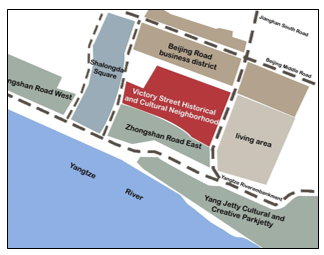
Figure 1 Map of the surrounding environment of Victory Street.
Victory Street is laid out with one main street and six alleys. The 'one street' refers to Victory Street, which runs through the entire block from east to west, with winding roads and uneven terrain. The space alternates between open and closed, with more open areas providing spaces for commercial activities for local residents. The entire block consists of six alleys: Du Gongbu Alley, Mei Tai Alley, Xin Chang Alley, Gaojia Alley, Jiankang Alley, and Dasa Alley. From a spatial perspective, the layout is well-organized, with the six alleys arranged from north to south. Except for Jiankang Alley, which runs parallel to the main road, the other alleys are distributed in a fishbone pattern perpendicular to the main road. The overall spatial structure has not undergone significant changes and still roughly matches the original building area.1 Victory Street is currently the only historical district in Jing-Sha urban area that remains well-preserved, with historical features intact and is considered a valuable heritage site.2
Cultural values
Historical Value: Victory Street was built on the "Ancient Cun Jin Dike" during the Tang Dynasty, originally named "Ninety Dock Street," commonly referred to as "Ninety Dock" due to the many docks along the Yangtze River.3 From the Tang Dynasty until the 20th year of the Republic of China, Victory Street was the main commercial street in Shashi, and during the Ming Dynasty, it became a hub for various businesses. According to the Ming history text "Guangyang Miscellanea," "At its peak in the late Ming, there were ninety-nine streets, each occupied by a different trade," hence it was also called "Ninety Shops Street". In 1895, after the Qing Dynasty signed the Treaty of Shimonoseki with Britain, Shashi, along with Suzhou, Hangzhou, and Chongqing, was designated as a foreign trade port, referred to as "Xingya Street." After the restoration, it was named "Zhongzheng First Street," and it was only officially renamed Victory Street after the victory of liberation. With the transformation of land functions, the shift of the urban construction center, and the migration of population, the commercial functions of Victory Street have gradually declined, and it is now primarily residential. The street still retains its original spatial layout, with a pleasant scale, mostly paved with bluestones. The overall spatial structure is well-preserved, and Victory Street still holds a large number of ancient houses.
Famous Figures' Former Residences: The Victory Street Historic and Cultural District is rich in intangible cultural heritage. The area is home to many renowned shops, such as Hengchun Mao Pharmacy and Li Yishun Zhai, which were established during the late Qing dynasty. Some famous individuals, both domestic and international, have also lived on this street. For example, No. 242 Victory Street is a late Qing-style courtyard with four entrances, once the residence of the drama celebrity Yu Shangyuan. The interior of the building is exquisitely decorated, and the entire structure exudes the fragrance of high-quality cedar wood. The courtyard even has a stage, which is rare in residential courtyards across the country. No. 252 Victory Street is the former residence of social activist Deng Yuzhi, while No. 214 was once the home of Wang Runzhi, president of the Shashi Chamber of Commerce. The fine wood carvings in the courtyard have been well-preserved and are quite distinctive. No. 262 and No. 264 Victory Street are the former sites of the Kuomintang prison, among other historical landmarks.
Uniqueness of residential architecture: The residential buildings on Victory Street are mostly from the Qing Dynasty, with a few from the Ming Dynasty and the Republican period (Table 3). The rest are predominantly reconstructed homes, displaying the distinctive features of the ancient commercial port town of Shashi.4 The main structure is a two-story, brick-and-wood building in a 'front shop, back residence' style, with narrow frontages and long depths. Some houses have four bays, while others have as many as eight, with asymmetrical axes. Each bay typically consists of a hall room, two main rooms, two side rooms, and a courtyard in the center, forming a '井' (well) layout. There are corridors between each bay, and the vertical arrangement is hall, courtyard, and bedroom. The horizontal roof layout often features a single door and two windows. Between each house, there are firewalls, and the entire Victory Street block only has the Deng Family Ancestral Hall and the Deng Family Garden, which are large mansions with pavilions and sculpted beams, but the other buildings have moderate-sized rooms, spacious and airy halls, and cleverly designed courtyards. They also feature exquisite wood carvings on the balustrades and wall panels, as well as simple hollowed-out decorative windows, creating a comfortable and pleasant living environment.5
|
Location |
Building name |
Building era |
Building structure |
Building value assessment |
|
No. 242 Victory Street |
Yu Shangyuan's former residence |
Qing Dynasty |
Brick-wood structure |
It has artistic value (Category II) |
|
No. 252 Victory Street |
Deng Yuzhi's former residence |
Qing Dynasty |
Brick-wood structure |
The architectural form represents the characteristics of Qing Dynasty residential buildings |
|
No. 67 Victory Street |
Yu Deling's former residence |
Qing Dynasty |
Brick-wood structure |
|
|
No. 262-266 Victory Street |
The ancestral house of the Deng family and the ancestral hall of the Deng family |
Qing Dynasty |
Brick-wood structure |
|
|
No. 63 Victory Street |
Princess Derling's former residence |
Qing Dynasty |
Brick-wood structure |
|
|
No. 109 Victory Street |
Li Yishun's store |
Qing Dynasty |
Brick-wood structure |
|
|
No. 115 Victory Street |
Yitangsheng pharmacy |
the early years of the Republic of China |
Brick-concrete structure |
It has artistic value (Category II) |
|
on the north side of the western end of Victory Street |
Former site of the Republican-era Sha City Prison |
The period of the Republic of China |
Brick-concrete structure |
The architectural form represents the characteristics of Republican-era residential buildings |
|
No. 81 Victory Street |
Residential house |
Qing Dynasty |
Brick-wood structure |
It has artistic value (Category II) |
|
It is a typical example of the front-shop, rear-residence layout of the Qing Dynasty |
||||
|
Victory Street No. 75, 85, 212, 214, 258 |
Residential house |
Qing Dynasty |
Brick-wood structure |
It has artistic value (Category II) |
|
The craftsmanship and decorative artistry of the architectural components have distinctive features and value |
||||
Table 3 A summary of outstanding historic buildings in the Victory Street historical and cultural district
Cultural Uniqueness: Historically, many famous figures have lived on Victory Street, and Jingchu culture has had a profound influence on traditional architecture. The architectural style itself is already unique. Some traditional well-known shops are concentrated here, and in terms of customs, the local opera is particularly distinctive, including Hexi opera, Han drama, and others. The local food culture is also unique, with a wide variety of famous dishes from Shashi. Therefore, the historical and cultural district of Victory Street in Shashi is the area with the richest heritage. Through analyzing the location and distinctive values of the district, Victory Street's historical and cultural area has potential catalytic elements, such as historical buildings, traditional streets and alleys, folk culture, and traditional business models. These can be divided into material and immaterial elements to comprehensively explore the suitable catalytic elements.
The protection and development of historically and culturally significant cities is a systematic project. As an important part of the ancient city of Jingzhou, the preservation of the complete historical appearance of the Victory Street area is crucial.6 By utilizing scenario theory and guided by historical culture, careful restoration and planning can not only protect Jingzhou's rich cultural heritage but also help pass on the city's cultural continuity and create a unique urban brand image.7
The facilities are outdated and there is a lack of supporting facilities, and the buildings in the neighborhood are seriously damaged
The public spaces within the block lack basic infrastructure and fail to meet the needs of daily life. Supporting facilities are absent, and there is a shortage of firefighting equipment and a fully developed water supply and drainage system.8 The streets are lined with numerous cement utility poles, and the tangled electrical wires are a mess, severely damaging the streetscape. Due to historical reasons, the streets and alleys are too narrow, the building density is high, and the situation is further worsened by unauthorized constructions, resulting in a chaotic and disordered street space. The original appearance of the block has been severely damaged (Figure 2).
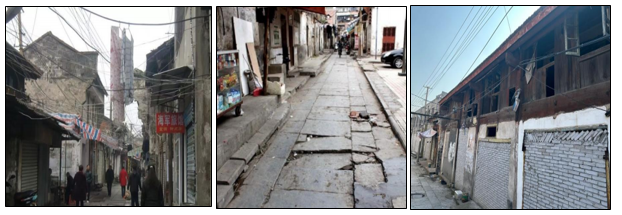
Figure 2 The current situation of Victory Street in Jingzhou City.
Historical buildings are mostly made of brick and wood. Due to the humid climate in Jingzhou, wooden structures have seriously deteriorated, and the strength of the wooden frame is insufficient.9 The interiors of these buildings are dark and damp, with poor ventilation and lighting. The living spaces are poorly lit, the rooms are small, and there are no separate kitchen or bathroom facilities. The public spaces in the courtyards are heavily occupied, the staircases are too narrow, the courtyard spaces are quite dark, and there is a lack of social interaction spaces. Hygiene conditions and safety management are difficult. Due to the loss of population in the area, many historical buildings have severe quality issues, with some walls even cracking and becoming dangerous. A large number of houses have become unsafe, and due to years of neglect, the protection and renewal of the area are urgent.10
The spatial layout is inefficient, and there is a lack of green space
There are some dead ends and obstructed streets within the historical and cultural district of Victory Street, which not only affects the smooth flow and convenience of the road system but also leads to a chaotic traffic environment. In the historical and cultural district of Jingzhou, there is also a widespread lack of public space. The traditional streets and alleys are narrow, with densely packed courtyards, making it difficult to provide open spaces for activities (Figure 4). These issues clearly cause inconvenience to the residents' transportation environment and need to be thoroughly addressed.
Through the description of the current land usage in the previous section, it is clear that the district leans more toward residential land use, with a large portion of the area dedicated to housing, sacrificing a significant amount of green space and public areas. At the same time, the lack of adequate public infrastructure and mismatched municipal facilities have caused inconvenience to residents' daily lives.11 In order to meet their production and living needs, residents, disregarding natural laws and established planning measures, have indiscriminately constructed buildings, leading to severe congestion in both traffic and the overall street layout. All green spaces in the district are primarily for protective purposes, and there is a severe shortage of recreational and leisure areas for residents. In terms of public facilities, the layout is not only unreasonable, but also suffers from low standards and poor service, with a severe shortage of public facilities per capita. The commercial land around Victory Street is gradually dispersing, with elongated commercial zones overly dependent on the central area. Urban management is inadequate, and small stalls and vendors are seen everywhere, with illegal and unregulated operations being prominent, causing traffic congestion and a deteriorating street environment, which affects the overall urban appearance of the district. There is no overall planning for the commercial land, and space is occupied wherever available, severely reducing residential areas, which has a significant impact on the daily lives of the community residents.
The utilization rate of historical and cultural resources is low
Through on-site investigation, it was found that many buildings and courtyard layouts in the Victory Street Historical and Cultural District are well-preserved. For example, the former residence of Princess De Ling at No. 63 Victory Street and the former residence of Deng Yuzhi at No. 252 Victory Street, but these buildings have long been vacant and left without maintenance (as shown in Figure 5). These historic residential courtyards possess valuable historical and cultural resources, and effective preservation measures should be taken to make them an integral part of the historical and cultural district's landscape. The explanation and promotion of the district's history and culture are concentrated in paid exhibition halls, while there is a lack of displays in the outdoor public spaces, which results in visitors merely viewing the buildings and landscapes inside the district. Additionally, the signage for the outdoor historical and cultural landscapes only includes the names of the objects, with no further information, failing to achieve the purpose of promoting the district's history and culture.
The primary function of the district is residential, and the previously street-facing shops had only simple business models. Residents' livelihoods within the district are not secured, and the residential spaces have deteriorated. Young people are more inclined to choose better living environments in commercial housing, which leads to an inability to attract new young residents. As a result, there has been a shift in the social class structure of the district. The functions of the area have become mainly focused on housing and leasing, with a few restaurants and vendors. The population is predominantly made up of elderly individuals and the unemployed. With the shift of the city center, the district's location advantage has gradually diminished, and it no longer attracts investment.
Currently, in the historical and cultural district renovation in Jingzhou, residents' opinions have not been adequately heard. From the beginning of the demolition, the residents of Victory Street have held differing views on this renovation. The middle-aged and elderly residents are emotionally attached to the district and unwilling to leave, while the younger residents are more willing to move to new communities. The relocation issue on Victory Street did not fully consider the residents' opinions, and the uniform relocation has caused the district to lose its authentic living atmosphere, significantly impacting the overall landscape. During field research, it was found that the residents of Zhongshan Road-Chongwen Street and Victory Street have expectations for the district's renovation and future development, with most expressing willingness to consider relocating. However, there are still some residents who wish to continue living there, with some even willing to pay for house reconstruction themselves. Currently, the feedback channels are not smooth, and there are disputes over property ownership. Residents find it difficult to improve their living environment, leading to a lower level of participation and enthusiasm for the district's development and utilization.
Strategies of enhancing the landscape quality of Victory Street
Spatial layout
Based on the overall spatial environment of the Victory Street area and its distinctive historical and cultural features, combined with the terrain and the original layout of the neighborhood, a systematic and rational plan for the spatial pattern of the streets and alleys is formulated. This results in a spatial layout structure of "one street, six alleys, and four sections," with Victory Street as the main thoroughfare, complemented by six distinctive alleyways and their surrounding traditional residential areas. Additionally, attention should be given to the following aspects:
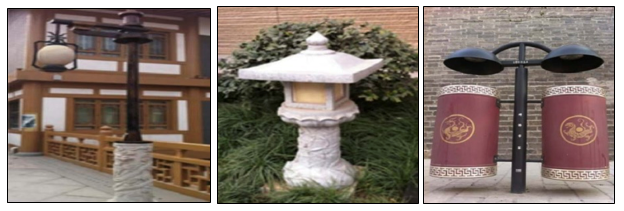
Figure 3 New street vignettes.
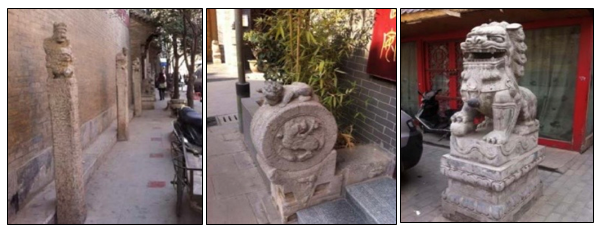
Figure 4 Extracting traditional elements as landscape vignettes.
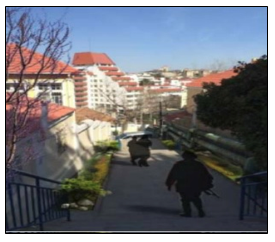
Figure 5 Modified narrower space site utilization.
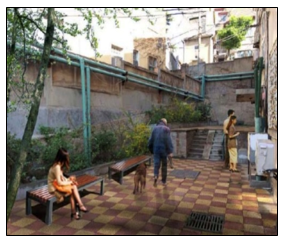
Figure 6 Remodeled courtyard.
Green space
As the most basic part of the urban ecological system, a perfect green space system can help to provide the residents with quality of life and create favorable conditions for people to have a better production and life. The development of the city must be sustainable, which is the real connotation of urban development. Considering that the green area of Victory Street is seriously insufficient, the street greening and protective greening are seriously insufficient, which is very unfavorable to the life of the neighborhood and the sustainable protection and utilization.
The planning and design will demolish the buildings that differ greatly from the architectural style in the historical and cultural street area, and plan and design them as the central green space, as well as the residents' privately erected shacks and so on, and design them as the courtyard green space, and unfold the landscape sequence of the neighborhood by taking the Beijing Road and the riverside avenue as the functional axes of the urban belt, and take the street trees along the street as the green sight line corridor, which is tightly combined with the street. Considering the requirements of land use and function, the green space of the neighborhood adopts classification planning, the commercial lots along both sides of the street are suitable for planting low shrubs and grasslands, and the residential area is suitable for planting tall dense forests. Various different types of vegetation are arranged and combined in an orderly manner in the form of points, lines and surfaces to form an overall green space system (Figure 7). There is a 107-year-old magnolia at the south end of the alley, which has witnessed the rise and fall of Victory Street and recorded the history of Victory Street as an ancient tree. It is necessary to do a good job in the protection of old trees as a prerequisite for the revitalization of its historical value. Through the status quo point of the old tree and the location of the greening area, a unique space node of the street is formed through the sequence.
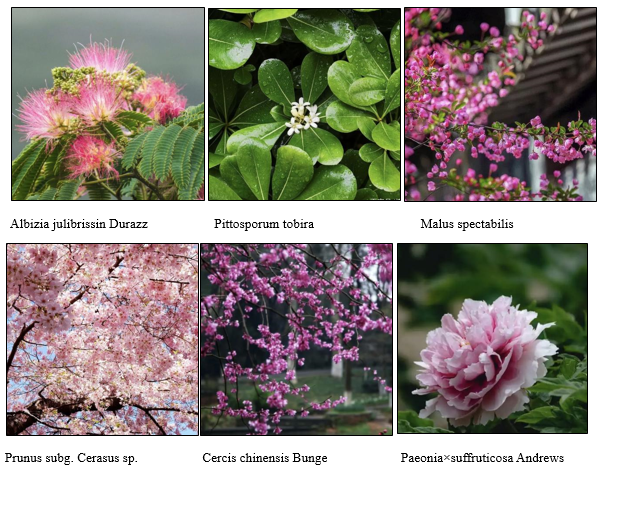
Figure 7 Street Planting Legend.
Public Space
In the process of protecting and utilizing Victory Street, in accordance with the residential neighborhood. The principle of common planning for commercial streets and other lots, maintain the overall appearance and characteristics of the neighborhood, and establish a public space system and a sign landscape system. According to the type and object of characteristic landscape, all the landscape of the neighborhood is divided into three categories: traditional residential landscape area, traditional commercial landscape area and traditional landscape coordination area.
Victory Street, as the core lot of the neighborhood, is combined with commercial features to build a traditional commercial feature style axis: taking advantage of the long-established catering advantages of Da Da Lane, it is set up as a traditional catering service style axis, while fully maintaining and carrying forward the historical features and characteristics of the commercial lots of Victory Street, Meitai Lane and Da Da Lane. In addition, taking into account the function and spatial form of other traditional neighborhoods which are mainly residential, Healthy Lane will be set up as a traditional residential landscape axis to maintain and carry forward the traditional residential characteristics of Healthy Lane, Xinchang Lane, Dugongbu Lane and Gaojia Lane (Figure 8).
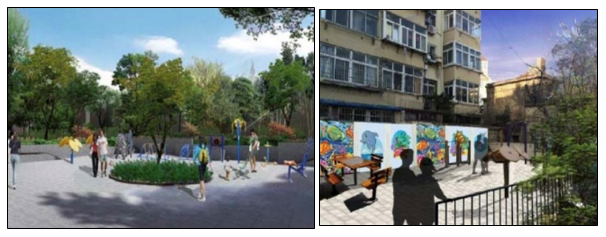
Figure 8 Adapted public space site utilization.
Shape the entrance and exit of Victory Street, plaza and other iconic landscape space, and at the same time reasonably adjust and maintain the key iconic landscape within the neighborhood to form a spatial landscape system. As the iconic main entrance of Victory Street, set up entrance plazas and new auxiliary pagodas at the main entrances on the east and west sides respectively, and at the same time set up additional small-scale public spaces in other streets and alleys such as Xinchang Alley. Inside the block, the existing characteristic features and resources are utilized to create the characteristic public space system of the block by establishing the flower and bird market and other characteristic landscape sketches, reasonably repairing and transforming the traditional cultural plaza (Figure 7), and maintaining the characteristics of the former residences of celebrities and the historical buildings of the old firms. The corresponding planning and design of the open space of the neighborhood will help to improve the production and living environment of the residents, and provide a comfortable and pleasant spatial environment for their recreation and cultural exchanges.
This paper takes Victory Street in Jingzhou City as a research object, systematically exploring the strategy system and practical pathways for micro-renewal of historical blocks from the perspective of cultural inheritance. Based on field surveys and problem identification, a comprehensive regeneration plan centered on spatial layout optimization, green space system enhancement, and public space remodeling has been proposed. The following discussion delves into multiple dimensions including practical challenges, cultural continuity, socio-economic benefits, and technological integration.
Feasibility and implementation challenges of micro-renewal strategies
The proposed spatial structure planning of "one main street, six alleys, and four sections" aims to restore the traditional fishbone-shaped street network of Victory Street while integrating modern facilities and functions based on the preservation of bluestone pavements, firewalls, and traditional building facades.
However, multiple challenges remain in implementation. First, the brick-wood structures suffer from wood component decay and reduced structural strength due to Jingzhou’s humid climate. Restoration must combine traditional craftsmanship with modern damp-proofing techniques, such as using traditional mortise-tenon structures composite with modern waterproof materials. Second, the block contains numerous unauthorized constructions and disorderly facilities, such as dense utility poles and exposed pipelines. These require integrated engineering solutions like "multi-pole integration" and "underground cabling," yet construction is difficult due to narrow lanes.
Balancing cultural inheritance and contemporary expression
Victory Street contains rich tangible and intangible cultural heritage, such as traditional shops, former residences of celebrities, as well as local opera and food culture. The renewal should not only protect the external form of historical buildings but also revitalize their cultural connotations. The study proposes extracting traditional elements and transforming them into landscape features, such as using blue bricks, wood carvings, and tile decorations in public spaces to enhance regional cultural identity. Meanwhile, it is suggested to repurpose idle resources such as the Deng Family Garden and Yu Shangyuan’s former residence into cultural exhibition halls or community theaters, developing immersive experience projects based on the "cultural IP" concept[5], integrating historical memory into contemporary life.
Victory Street currently faces severe population aging, outflow of young people, and insufficient social vitality. The renewal process must avoid gentrification tendencies and prevent the rupture of original community networks. Although this study emphasizes public participation, it does not specify concrete mechanisms. It is advisable to draw on the "community planner" system and establish a co-governance committee composed of residents, merchants, and experts to facilitate deliberative decision-making on matters such as business type guidance and spatial renovation. For residents unwilling to relocate, models such as "in-situ resettlement + mixed functions" could be explored, allowing ground floors to host small businesses (e.g., handicraft workshops, tea houses) to retain living ambiance while enhancing economic sustainability. Furthermore, feedback channels and property rights coordination mechanisms should be improved to avoid delays due to ownership disputes.
To address the lack of green space, the study proposes a classified planning strategy, planting low shrubs and lawns in commercial areas along the streets, and configuring tall dense trees in residential areas to form a green network combining points, lines, and surfaces. Among these, the 107-year-old magnolia tree can serve as a green heritage node, combining protective development to shape the block’s memory anchor.
Additionally, sponge city technologies such as permeable paving and rain gardens can be introduced to improve the microclimate and enhance ecological resilience. These measures not only optimize the living environment but also provide ecological technical support for moisture prevention and corrosion protection of historical buildings.
Public space renovation is key to stimulating neighborhood vitality. The study suggests building a functional system of "traditional commercial axis (Victory Main Street) + traditional catering axis (Da Ci Alley) + traditional residential axis (Jiankang Alley)”, and enhancing recognizability and stay ability through entrance plazas and cultural nodes.
It should be noted that business type guidance should avoid homogeneity; instead, differentiated layouts should be implemented based on the characteristics of the streets and alleys: the main street focuses on old-established brands and cultural retail, while the smaller alleys cater to quieter formats such as guesthouses and studios. At the same time, festival activities (e.g., Han opera performances, food markets) can enhance space utilization efficiency, achieving the goal of "using activities to enliven space, and using space to promote culture."
Micro-renewal is not limited to physical transformation but also requires long-term management supported by technological means. It is recommended to establish a smart management platform integrating functions such as building structure monitoring, tourist flow regulation, and energy management systems to ensure a dynamic balance between block conservation and usage. Furthermore, an operational model of "government guidance + market operation + community participation" should be explored, attracting young entrepreneurs through low-rent policies and fostering new formats such as intangible cultural heritage experiences and independent design. Drawing on cases like Xi’an’s Sanxue Street8 and Zhengzhou’s Pingdeng Street,9 Victory Street could adopt a phased implementation strategy, prioritizing infrastructure and public space renovation before gradually expanding to building facades and courtyard environment improvements.
This study focuses on macro-strategies and spatial planning; the following aspects warrant further development: Technical standards and craftsmanship methods for adaptive reuse of historical buildings; Quantitative evaluation of micro-renewal effectiveness and dynamic feedback mechanisms; Deep integration models of cultural heritage and digital technologies (e.g., AR, digital guides).
The practice of Victory Street provides an important reference for the renewal of historical blocks in small and medium-sized cities. Its core experience lies in taking cultural inheritance as the kernel and achieving synergy between preservation and development through multi-dimensional integration of space, society, economy, and technology. In the future, a replicable and adaptable strategy toolbox can be further developed for promotion in renewal practices of similar historical blocks.
None.
The authors declare there are no conflicts of interest.

©2025 Jiaxin, et al. This is an open access article distributed under the terms of the, which permits unrestricted use, distribution, and build upon your work non-commercially.