Journal of
eISSN: 2373-6437


Research Article Volume 17 Issue 5
1blanquis_k9@hotmail.com
2Regional General Hospital No 196 IMSS México East, Mexico
3General Hospital of Queretaro, Mexico
4Tlahuac General Hospital, Mexico
Correspondence: José Alfredo Cortes Munguía, Calzada San Juan de Aragón 285, Granjas Modernas, Gustavo A. Madero, CP, 07460 Mexico City, CDMX, Tel 5555778867
Received: November 18, 2025 | Published: December 17, 2025
Citation: Silva EV, Munguía JAC, González AL, et al. Effect of hypertonic solutions on the optic nerve sheath diameter and its relationship with mortality in patients with severe TBI. J Anesth Crit Care Open Acce. 2025;17(5):160-163. DOI: 10.15406/jaccoa.2025.17.00640
Severe traumatic brain injury (TBI) is a serious brain injury that involves secondary damage at the neuronal level and complications such as cerebral edema and intracranial hypertension, which increase morbidity and mortality. Management in the Intensive Care Unit (ICU) focuses on preventing secondary brain injury by optimizing cerebral perfusion pressure and reducing intracranial pressure (ICP) with osmotic therapy and non-invasive techniques such as optic nerve sheath ultrasonography. The objective of the present observational, cohort, and retrospective study carried out in the ICU of a second-level hospital in Mexico City was to determine the effect of hypertonic solutions on the optic nerve sheath diameter (ONSD) and its relationship with mortality in patients with severe TBI.
Objective: To determine the impact on mortality in patients with severe traumatic brain injury (TBI) who are treated with hypertonic solutions and monitored via the optic nerve sheath diameter.
Methods: It is a retrospective and observational study conducted on forty patients with TBI admitted to the ICU from November 2024 to June 2025. The patients admitted to the ICU underwent hyperosmotic or hypertonic therapy to reduce intracranial pressure. Patient monitoring was performed using ultrasonography placed at the bedside. Sociodemographic data, ultrasound results, treatment received, and the outcome of each patient were analyzed.
Results: The study comprised 40 patients, of whom 26 were men (65%), and 14 were women (35%), with an average age of 34.2 ± 10.9 and 34.1 ± 12.5 years, respectively. It was identified that an Optic Nerve Sheath Diameter (ONSD) greater than 5mm [OR: 14.76; 2.58, 84.48; p-value<0.05] significantly increased mortality in TBI patients, while treatment with 20% mannitol significantly reduced the mortality rate [OR: 8.08; 1.08, 60.74; p-value<0.05, aR2=27.06%].
Conclusion: Treatment with hypertonic saline solution is an effective therapy that reduces mortality in patients with TBI. Furthermore, the optic nerve sheath diameter is a reliable indicator for non-invasive monitoring of these patients.
Keywords: Severe traumatic brain injury, cerebral edema, intracranial hypertension
Severe traumatic brain injury (TBI) is a temporary or permanent alteration in brain function caused by the action of an external force, representing a national and global public health problem. In Mexico, according to INEGI, the TBI-related mortality rate is estimated to range between 30% and 70%, predominantly affecting young men over women at a 3:1 ratio. It's estimated that 75% of TBI-related deaths are caused by traffic accidents (54%), falls (32-33%), and violence (9-11%). Meanwhile, globally, an average of 200 cases per 100,000 inhabitants is estimated.1
Treatment for TBI, such as hyperosmolar and hypertonic therapy, is aimed at preventing and mitigating secondary injuries like the increase in intracranial pressure. This is because an elevated value of this parameter is associated with a worse prognosis for these patients.2 Solutions such as mannitol and hypertonic saline solution (HSS) are the most studied and widely used hyperosmolar agents in TBI treatment. Mannitol, in doses of 0.5 to 1.5 grams/kilogram of body weight, acts as an osmotic diuretic, decreasing cerebrospinal fluid and cerebral water, producing cerebral vasoconstriction and a reduction in intracranial pressure, with a rapid effect between 15 and 30 minutes after administration and a prolonged effect of 1.5 to 6 hours. However, mannitol (20% and 25%) can create a rebound mechanism due to its ability to cause changes in the osmotic gradient and attract water once it crosses the blood-brain barrier. Another agent used is HSS in concentrations of 3%, 7.5%, and 23.4%, which acts through passive movement across the blood-brain barrier, with a half-life of 4 to 6 hours, increasing intravascular volume and in some cases increasing cardiac output.3
One of the challenges accompanying pharmacological intervention is the monitoring of intracranial pressure (ICP) in TBI patients. Some methods are invasive, which carry risks of infection or hemorrhage, thus opening the possibility for establishing new ICP monitoring strategies to allow for more timely interventions, detect deterioration of cerebral compliance, and improve the patient survival rate.4,5 Consequently, the combination of therapy and monitoring is crucial to reducing mortality rates in patients with severe TBI. An alternative for measuring and monitoring ICP is through the measurement of the optic nerve sheath diameter (ONSD) using ultrasonography (3.8 MHz linear transducer) placed at the patient's bedside.6 It has been reported that an ONSD with an estimated ICP > 20 mmHg sustained for more than 10 minutes has a reference diameter value of 0.5 cm (5 mm), which is considered intracranial hypertension. Nevertheless, there is limited information regarding TBI patients undergoing treatment with 3% HSS who use ultrasonographic measurements of the ONSD as an indicator of mortality. In this context, it is crucial to research the impact of hypertonic solutions on the ONSD and its correlation with mortality in patients with severe traumatic brain injury. In this retrospective and observational study, the effect of pharmacological therapy with 3% HSS and 20% mannitol in severe TBI patients was analyzed and compared, using the optic nerve sheath diameter values as a prognostic indicator. We highlight the therapeutic importance of hypertonic solutions in this study, based on ultrasonographic monitoring of the ONSD value as a potential indicator of mortality in patients with severe TBI.
Data collection
A retrospective and observational study was conducted in the Intensive Care Unit of a secondary-level hospital in Mexico City. Data was collected from the medical records of 40 patients diagnosed with severe Traumatic Brain Injury (TBI) who were admitted from November 2024 to June 2025. The main inclusion criteria for this study were patients between 18 and 65 years of age, of both genders, diagnosed with TBI. Patients with previous craniotomies, cerebral neoplasia, meningitis, and infectious encephalitis, patients who requested voluntary discharge, as well as those patients who did not accept the informed consent, were excluded. For each medical record, sociodemographic data, the score value of the Glasgow Coma Scale, values from non-invasive neuromonitoring with measurement of the optic nerve sheath diameter (ONSD) of both eyeballs to estimate intracranial pressure (ICP), and the type of pharmacological treatment were collected.
Treatment and ultrasonographic monitoring
Patients received treatment with either 3% hypertonic saline solution or 20% mannitol treatment. The number of patients who received each treatment was maintained in similar proportions (1:1). After the bolus administration, ultrasonography monitoring was performed at the patient's bedside. Neuromonitoring allowed for the recording of the optic nerve sheath diameter of both eyeballs.
Statistical analysis
With the collected data, the calculation of measures of central tendency, including the mean and median, and measures of dispersion, including the standard deviation, was performed. For qualitative variables, frequencies and percentages were reported. In addition, Odds Ratios (OR) were calculated for categorical variables and the results were adjusted using logistic regression models. The odds ratios values were calculated for each model, and their association with patient mortality was analyzed. P-values < 0.05 were considered statistically significant. Statistical analyses were performed with the Minitab V 32.0 software.
The study comprised a sample of 40 patients diagnosed with severe TBI (Traumatic Brain Injury), who were admitted to the Intensive Care Unit. Of the total number of patients, a higher prevalence of men compared to women was evidenced in a 2:1 ratio. The admitted male patients had an average age of 34.2 (SD 10.9) years and females an average age of 34.1 (SD 12.5) years. The main cause of admission to the Intensive Care Unit for these patients was cerebral edema resulting from a severe traumatic brain injury. These patients, primarily young adults, had a Glasgow score ranging between 3 and 8. The results also showed that the mortality rate was lower in men than in women (31% versus 57%) and lower in the group that received 3% hypertonic saline solution (HSS) treatment compared to the group that received 20% mannitol (29% versus 56%) (Table 1).
|
Variable |
Male (n=26) |
Female (n=14) |
|
Age, mean ± SD |
34.2 ± 10.9 |
34.1 ± 12.5 |
|
GCS |
||
|
Score: 3, n, (%) |
14 (54%) |
6 (43%) |
|
Score: 8, n, (%) |
12 (46%) |
8 (57%) |
|
Therapy |
||
|
HSS 3%, n, (%) |
17 (65%) |
7 (50%) |
|
Mannitol 20%, n, (%) |
9 (35%) |
7 (50%) |
|
Mortality, n, (%) |
8 (31%) |
8 (57%) |
Table 1 General characteristics of patients with traumatic brain injury admitted to the ICU between November 2024 and June 2025 from a third-level hospital in Mexico
SD, Standard deviation; HSS, hypertonic saline solution; GCS, Glasgow Coma Scale
Based on the exploratory study, we conducted a quantitative study through a logistic regression analysis using patient mortality as the response variable and sociodemographic data, treatment, and the optic nerve sheath diameter (ONSD) value as predictor variables (Table 2).
|
Variable |
Odds Ratio |
95%CI |
p-value |
|
GCS |
3.67 |
0.96-14.03 |
0.058 |
|
HSS 3% |
0.32 |
0.08-1.20 |
0.092 |
|
Mannitol 20% |
3.12 |
0.83-11.70 |
0.092 |
|
ONSD |
11.4 |
2.54-51.10 |
0.005 |
Table 2 Result of bivariate logistic regression analysis of factors related with morality in patients with traumatic brain injury admitted to the ICU between November 2024 and June 2025 from a third-level hospital in Mexico
CI, confidence interval; HSS hypertonic saline solution; GCS, Glasgow coma scale; ONSD optic nerve sheath
As anticipated, it was observed that patients who obtained a score of 3 on the Glasgow scale compared to those who obtained a score of 8 did not show a statistical difference between these groups (OR: 3.67; [0.96, 1.43]; p-value = 0.058). On the other hand, the study also revealed that the group of patients with severe TBI with an ONSD greater than 5mm showed an almost 11.4 times higher risk of mortality compared to those patients with an optic sheath diameter less than 5mm (OR 11.400 (2.5429, 51.1076), p-value < 0.05). Similarly, it was found that patients who received 3% hypertonic saline solution as treatment had a lower mortality rate of approximately 5.8 times compared to those who received 20% mannitol (OR: 0.1723 (0.0344, 0.8630), p-value < 0.05). Also, the model that included age and ONSD demonstrated that the probability of a mortality event is approximately 12 times higher in patients who have been evaluated with diameters greater than 5mm in the optic nerve sheath (OR: 12.0869 (2.5987, 56.2181), p-value < 0.05). The multivariate logistic regression showed that the type of treatment and the ONSD are significant variables associated with mortality in patients with severe TBI.
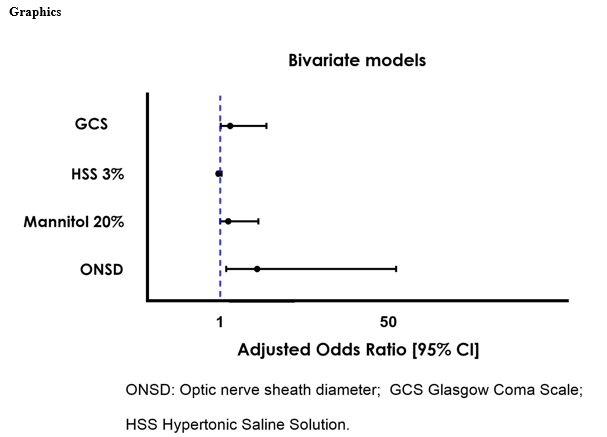
Figure 1 Forest plot of the GCS, pharmacological treatment and ONSD on the mortality in patients with traumatic brain injury.
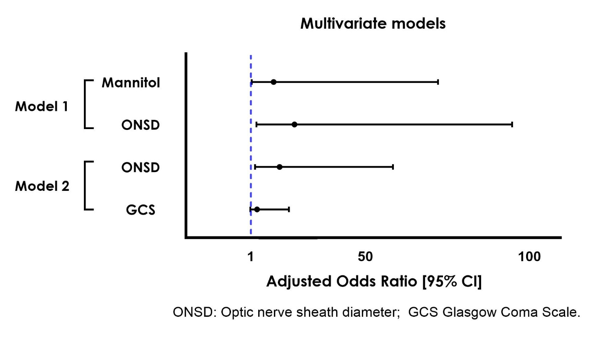
Figure 1 Forest plot of the GCS, pharmacological treatment and ONSD in different models to predict the mortality risk in patients with traumatic brain injury.
In this retrospective and longitudinal investigation, it was observed that the administration of 3% hypertonic saline solution (HSS) has a significant effect on the risk of mortality in patients with severe TBI (Traumatic Brain Injury). Furthermore, it was revealed that the ultrasonographic evaluation of the optic nerve sheath diameter (ONSD) represents a non-invasive method with a prognostic value for mortality in critically ill patients. We observed that the administration of 3% HSS contributes to a notable decrease in the risk of mortality in patients with severe TBI, the prediction of which can be improved with the measurement of the ONSD at 120 minutes after its administration. The findings obtained are comparable to other retrospective investigations and meta-analyses conducted in various cohorts of patients with TBI, where an association has been detected between the administration of 3% hypertonic solutions, the measurement of ONSD, and the patient discharge rate. This evidence suggests that this pharmacological intervention is effective in reducing blood pressure. Additionally, the significant association between ONSD measurements and the mortality rate indicates the possibility of being integrated into these treatment schemes, thus improving the prognostic value regarding the patient's mortality risk.7-13
In this same study, it was evidenced that both the 3% hypertonic saline solution therapy and 20% mannitol significantly decrease the risk of mortality, but in a slightly greater proportion for the patients who received the hypertonic solution. However, our analysis did not reveal a comparative significance between these treatments. Other studies have shown an analogous trend, opening the debate on the advantages of each treatment in patients with severe TBI. 11 Although a large number of studies have not managed to identify significant differences between these treatments, it is relevant to highlight that factors such as adverse events can be determinant in the choice of each treatment. For example, the administration of hypertonic saline solution leads to electrolyte imbalances such as hypernatremia, hypokalemia, and hyperchloremic acidosis.14,15 In contrast, despite these potential adverse events, it has also been shown that more concentrated HSS solutions are more relevant in the treatment of neurocritical patients.16 Additionally, retrospective investigations have evidenced that the administration of hypertonic saline solution increases the survival rate in patients with TBI compared to the administration of mannitol (55% versus 46%).17 Conversely, various meta-analyses using the Glasgow scale have indicated that there is no conclusive evidence to support the superior efficacy of intravenous HSS in crucial aspects such as long-term neurological function, mortality, control of intracranial pressure (ICP), or the duration of hospital or Intensive Care Unit (ICU) stay.
Finally, our research showed certain limitations; primarily, some vital parameters of the patients were not collected, and their relationship with mortality was not examined. Additionally, comorbidities were not recorded, which could act as a confounding variable. However, our study is distinguished by its balance in most study variables, which allows for obtaining consistent statistical results with less bias generated by the size of the subgroups.
None.
None.

©2025 Silva, et al. This is an open access article distributed under the terms of the, which permits unrestricted use, distribution, and build upon your work non-commercially.
