MOJ
eISSN: 2574-9722


Case Report Volume 10 Issue 2
Correspondence: Dr. Trupthi Das, Department of Radiology, People Tree Hospital, Bangalore, India., Tel +91 9740105124
Received: July 08, 2025 | Published: July 29, 2025
Citation: Das T, Chowdhary P, Tikare UN, et al. Pericallosal lipoma with agenesis of corpus callosum and polymicrogyria. MOJ Biol Med. 2025;10(2):97‒99. DOI: 10.15406/mojbm.2025.10.00248
Pericallosal callosum lipoma is a rare fat containing intracranial congenital anomaly. It can manifest with agenesis or dysgenesis of the corpus callosum. The tumour remains asymptomatic and rarely manifests with severe symptoms. This study aims to present a paediatric case of pericallosal lipoma with agenesis of corpus callosum and polymicrogyria.
Keywords: pericallosal lipoma, corpus callosal agenesis, polymicrogyria
SWI, susceptibility weighted imaging; CSF, cerebrospinal fluid; MCD, malformation of cortical development
The literature available reports that the pericallosal lipoma is rare fat containing congenital anomaly of the brain. The prevalence of lipomas of whole brain reported to be 5% of primary brain tumours and prevalence of pericallosal lipoma is reported to be less than 0.1% of the intracranial tumours. The two morphological forms of pericallosal lipoma include tubulonodular and curvilinear. The tubulonodular lipomas are more common in morphology. The pericallosal lipoma is often associated with agenesis or hypogenesis of the corpus callosum. Lipoma of corpus callosum is often shown to be asymptomatic and rarely discovered during the radiological investigations for some other conditions like trauma. The pericallosal lipoma is shown to be grow very slowly.1, 2 The prognosis of the pericallosal lipoma is subjected to concomitant cortical malformations which is often favourable. This study reports a case of 8 months old infant.3 Only 1 case of pericallosal lipoma with polymicrogyria has been reported before.
An 8 months old female infant born of a non-consanguineous marriage by full term normal delivery at hospital was referred for MRI brain imaging in view of developmental delay. On general examination, the baby had not attained neck holding. The neurological examination showed mild hypotonia. Blood investigations and metabolic work up for developmental delay was within normal limits.
1.5T MRI brain imaging revealed a fairly well-defined midline curvilinear lesion in peri callosal region which measured 3.5x1.8x1.3cm (anteroposterior x craniocaudal x transverse dimensions). It was hyperintense on T1 (Figure 1A) and T2 (Figure 1B) weighted sequences and extended into bilateral choroid plexus. The lesion showed complete signal suppression on fat supressed T1 (Figure 1C) weighted sequence, consistent with fat attenuation. Thin rim of T1 and T2 hypointensity was noted at the periphery of the lesion which showed blooming on GRE (Figure 1D) sequence which was secondary to peripheral calcification. There was blooming within the lesion secondary to chemical shift artefact. There was complete non-visualization of corpus callosum (Figure 2A). The lateral ventricles had non- converging parallel orientation with dilatation of bilateral occipital horns of lateral ventricle (Figure 2B) and high riding 3rd ventricle secondary to agenesis of corpus callosum. White matter volume loss with polymicrogyria was noted in bilateral parieto-occipital and temporal lobes (Figure 1A, 1B, 2B).
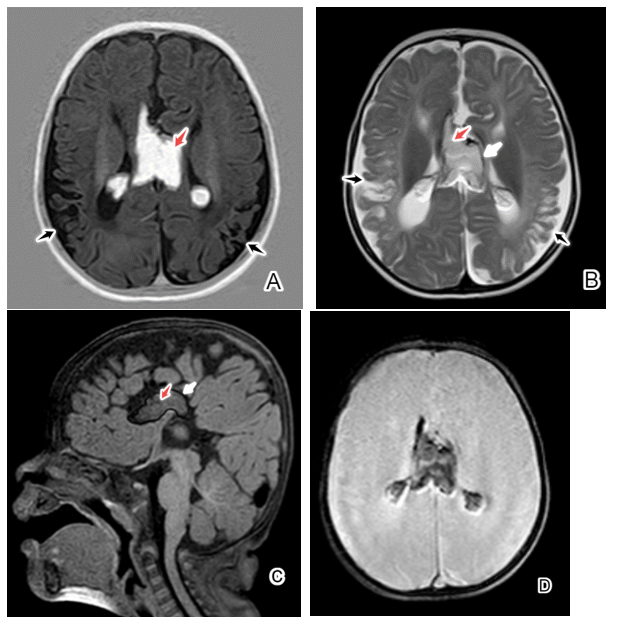
Figure 1 1.5T MRI brain of 8 months old infant.
T1 weighted (A) and T2 weighted (B) axial images showing midline hyperintense lesion (red arrow) extending into choroid plexus of bilateral lateral ventricles with thin peripheral hypointense rim (white arrow). Mild white matter volume loss with polymicrogyria in bilateral parieto-occipital lobes (black arrows).
T1 SPIR sagittal image (C) showing signal suppression of the lesion (red arrow) with hypointense peripheral rim (white arrow). Axial FFE image (D) shows irregular central and peripheral blooming.
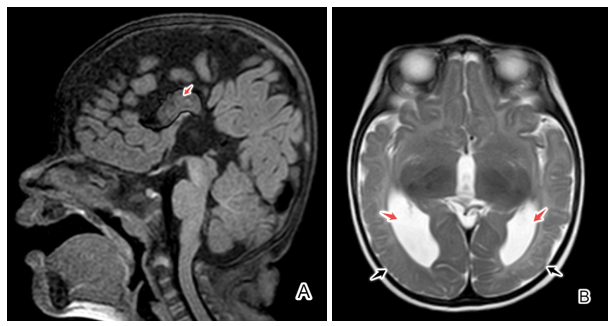
Figure 2 1.5T MRI brain of 8 months old infant.
T1 SPIR sagittal image (A) showing pericallosal lipoma (red arrow) with non-visualisation of corpus callosum and high riding 3rd ventricle. T2 weighted axial image(B) showing dilated occipital horns (white arrow) of bilateral lateral ventricles and polymicrogyria in bilateral occipital and temporal lobes (black arrow).
The pericallosal intracranial lipomas are rare type of intracranial congenital anomalies. The prevalence is reported to be less than 0.1% of all the intracranial tumours. The pericallosal lipomas are often classified as anterior or posterior groups according to their location related to carpus callosum. The anterior type of pericallosal lipomas is tubulonodular in shape and have size of more than 10 mm and often manifest with associated intracranial anomalies including those affecting the corpus callosum. The posterior form is often elongated, thin and smaller in than 10 mm and often located around the splenium. Anterior type of pericallosal lipoma is also called as tubulonodular type whereas the posterior type is also called as curvilinear type of pericallosal lipoma. The posterior lipoma had low incidence compared to anterior counter parts.4,5,6 In our case, the lipoma was situated in anterior part.
The literature had shown that, the pericallosal lipomas occur with choroid plexus lipoma in 20- 50% of the cases.3 Agenesis or hypogenesis of the corpus callosum may occur along with pericallosal lipomas.6 Agenesis of corpus callosum in such cases is postulated to be secondary to disturbance of its development from pericallosal lipoma.
The aetiology of pericallosal lipoma is controversial. But lipomas in cranium can be due to dysgenesis or persistence of the primitive meningeal tissue.7 The lesion may be due to abnormal differentiation primitive meninx being differentiated as lipomatous tissue which normally occurs between 8th and 10th week of gestation.8 Majority of the pericallosal lipomas remain asymptomatic. Clinical features may include seizures, mental disorders, paresis or migraines secondary to concomitant disorders. It can also result in obstructive hydrocephalus in some patients.
Imaging with CT or MRI remains as the mainstay of the diagnosing the pericallosal lipomas. CT usually manifests as well defined, midline pericallosal formation, it is often homogenous and hypodense of – 40 HU to -100 HU density. MRI can differentiate the extension of lipoma and also helps in differential diagnosis with intracranial teratoma. Fat usually presents as hyperintense lesion in T1 and T2 sequences. On T1 sequences, both hematomas and lipomas of pericallosal region appear hyperintense with gradient echo (GRE) or susceptibility weighted imaging (SWI) showing blooming. The two lesions can be distinguished with fat suppressed T1 weighted imaging, where the signal intensity of lipoma gets suppressed. Blooming on GRE or SWI sequences within pericallosal lipoma is observed secondary to chemical shift artifact. Peripheral blooming is attributed to lipid and cerebrospinal fluid (CSF) interface at pericallosal region. On the other hand, central blooming is attributed to microscopic mineralization observed within the lipoma.5 In our case, the areas of peripheral blooming corresponded to hypointense rim of T1 and T2 weighted sequences. This indicates the cause of peripheral blooming in our case to be peripheral calcification.
This study also noted presence of polymicrogyria with white matter volume loss. Only one study noted polymicrogyria associated with pericallosal lipoma.9Polymicrogyria is a type of malformation of cortical development (MCD) in which there is overfolding of gyri along with abnormal lamination of the cortex. It can be secondary to genetic mutations, peripheral ischemia or infections. It occurs during lateral neuronal migration and early cortical organisation stage of cortical development.10 Bilateral perisylvian polymicrogyria is the most common pattern (61% to 80%) observed. Bilateral parieto-occipital and temporal pattern of polymicrogyria which was observed is comparatively rare (3-7%).11,12
There is no specific treatment for the pericallosal lipomas. The treatment is symptomatic like use of anti-epileptic medications in case of seizures. Surgery is rarely indicated due to rich vascularity. Imaging follow up may not be required.13
None.
The authors declare that there are no conflicts of interest.

©2025 Das, et al. This is an open access article distributed under the terms of the, which permits unrestricted use, distribution, and build upon your work non-commercially.